
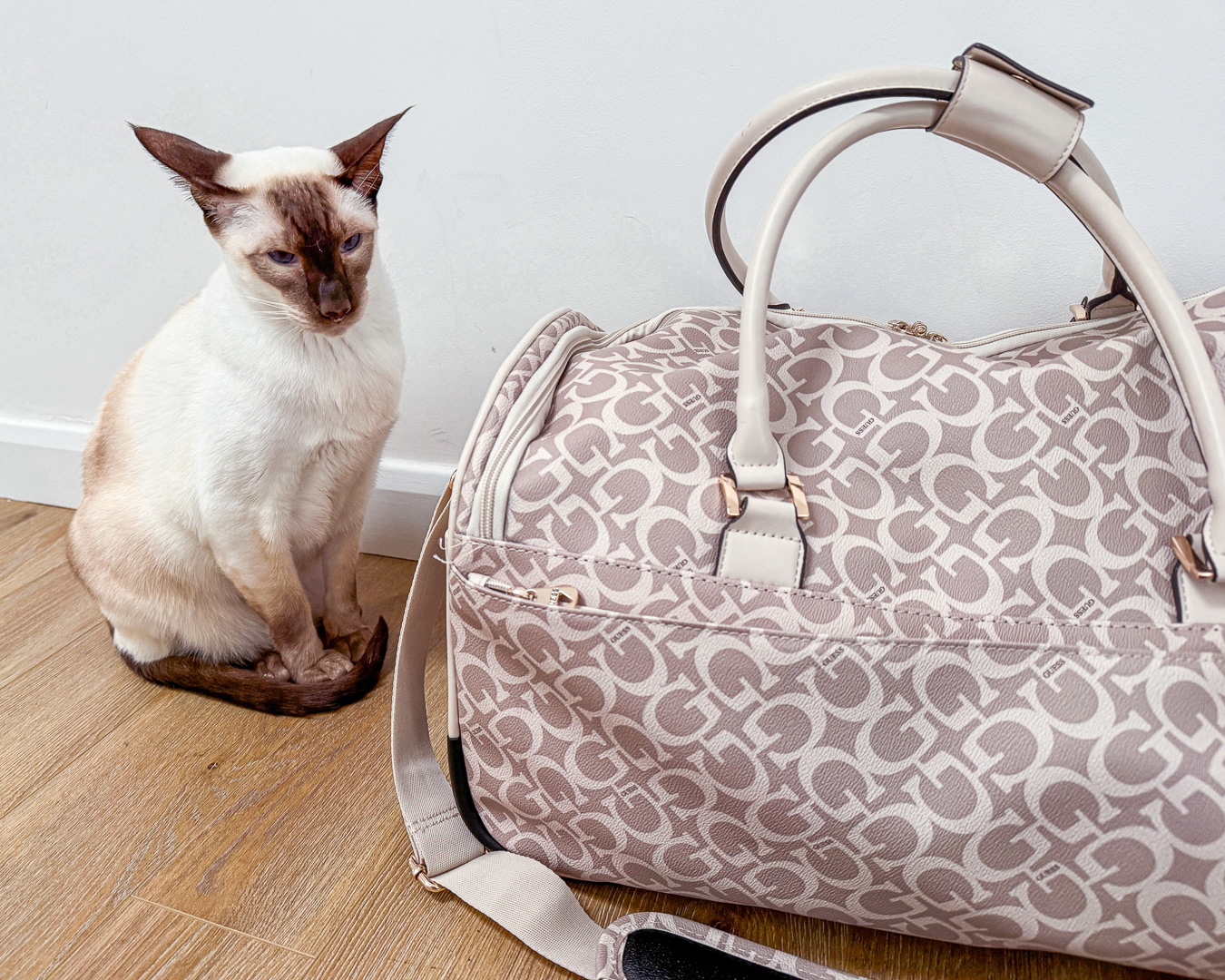
Bailey, a Siamese cat in Brighton, carefully supervising my departure at the end of the sit.

A few considerations before you pack the suitcase
There is a particular kind of guilt that appears the moment one opens a suitcase in a household with a cat.
They may be asleep. They may appear indifferent. They may even be facing the opposite direction.
And yet — they know.
Cats are creatures of habit, and while they rarely object loudly (unless it involves the vet), they do appreciate the world remaining sensibly arranged. A little thoughtful preparation before your holiday helps ensure that your absence feels like a minor scheduling adjustment rather than a dramatic life event.
Here are some gentle considerations...
————
1. Preserve the illusion of normality
In the days before you leave, resist the urge to overhaul the house.
Cats take comfort in predictability. Feeding times, evening rituals, the gentle rustle of a Dreamies pouch at 9pm — these small repetitions anchor their world.
Keep everything as ordinary as possible. Holidays are exciting for humans. For cats, routine is the real luxury.
————
2. Do not suddenly redesign the interior
This is not the week to relocate the litter tray to “a more discreet position”.
Leave favourite sleeping spots untouched. Resist deep-washing every blanket (your scent is reassuring, even if it is not, strictly speaking, fresh linen). Ensure scratching posts remain in their usual territories.
To us, these are objects. To a cat, they are infrastructure.
————
3. Write everything down (yes, everything)
Even if your cat’s routine feels self-explanatory, document it:
— Feeding quantities (precisely please — “a handful” is not a unit of measurement)
— Preferred bowls (and if these can be placed in the dishwasher or mush be hand-washed)
— The location of treats and favourite toys
— Cat carrier and veterinary contact details
— Hiding places of note
— Emergency contact information
— Subtle habits (“will only drink BRITA filtered water”)
Clear notes allow care to continue seamlessly — which is far more reassuring than improvisation.
————
4. Consider temperament, not just logistics
Some cats are robust little stoics. Others are… more emotionally nuanced.
Senior cats, shy cats, or those deeply bonded to evening routines often benefit from overnight presence rather than brief visits. The quiet hours — dusk and early morning — are when cats are most aware of absence.
Ensuring someone is there through the evening and into the morning can make the difference between a cat who settles calmly and one who has an existential crisis at 3am.
Continuity during those hours matters more than many people realise.
————
5. Avoid the Big Goodbye
It is tempting to kneel, explain your itinerary, promise postcards, and have a small emotional moment.
I would advise against it.
Cats do not interpret lengthy goodbyes as reassurance. They interpret them as unusual behaviour. A calm, ordinary departure — much like popping out for milk — is typically best.
Dignity on both sides.
————
6. Plan for a civilised return
When you come home, remember that while you have been navigating airplanes and baggage reclaim, your cat has been maintaining standards.
Enter quietly. Unpack gradually. Allow them to re-approach you in their own time. Suitcases contain many smells and few explanations.
Most cats recalibrate swiftly once routine resumes — though some may choose to express restrained disapproval for several hours. This is normal and, arguably, deserved.
————
A final thought
With thoughtful preparation, your holiday need not disturb your cat’s sense of order. Cats are remarkably adaptable when their environment remains steady and their care consistent.
In truth, preparing your cat for your holiday is less about managing absence and more about preserving continuity — keeping their world recognisable, even while yours briefly expands.
And that, rather wonderfully, allows you to travel with a lighter heart.
—
Ever yours in good order,
The British Cat Nanny 🐾